If you’re ready to start creating content but can’t decide where to begin, you’re not alone. Blogging vs YouTube vs Newsletter The blogging vs YouTube vs newsletter debate is one of the most common questions new creators and business owners ask, and the honest answer is: it depends on your skills, your goals, and how much time you can realistically commit each week. Choosing the right starting platform can save you months of wasted effort, so it’s worth thinking this through before you publish anything.
This guide breaks down how blogging, YouTube, and newsletters actually compare, so you can decide which platform to start with based on your specific situation rather than guessing.
Why the Blogging vs YouTube vs Newsletter Decision Matters
Every platform rewards a different kind of effort. Blogging rewards consistency and search optimization. YouTube rewards watchability and production value. Newsletters reward relationship-building and direct access to an audience’s inbox. Picking the wrong one for your strengths can lead to burnout before you ever see results, while picking the right one lets your natural skills compound over time.
Before comparing the three head-to-head, it helps to understand what each platform is actually optimized for.
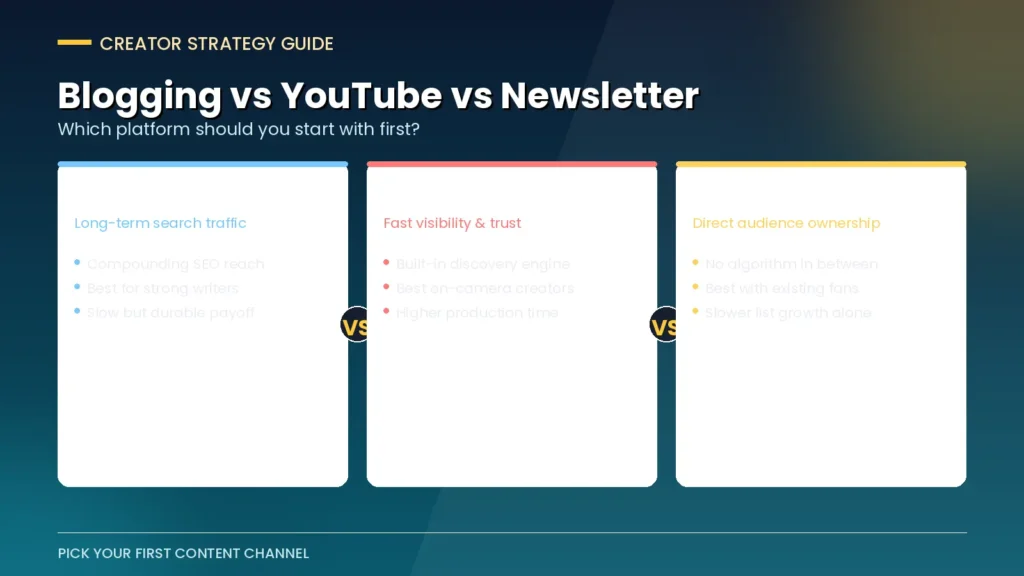
Blogging: Best for Long-Term Search Traffic
A blog is a website made up of articles, usually optimized to rank on Google and other search engines. Its biggest strength is compounding organic traffic — a well-written post can keep bringing in readers years after it’s published, with little extra effort from you.
Blogging works well if:
- You enjoy writing and can commit to consistent publishing
- You want long-term, passive traffic from search engines
- You’re comfortable learning basic SEO principles
- You want a content asset that keeps working without constant re-promotion
The downside is patience. Blogs typically take three to six months (sometimes longer) to gain real search traction, and success depends heavily on keyword research and on-page SEO.
YouTube: Best for Visibility and Trust-Building
YouTube is the second-largest search engine in the world, and video content builds trust faster than almost any other format because viewers can see and hear you directly. It’s also uniquely good at building parasocial trust — people feel like they know you after watching several videos.
YouTube works well if:
- You’re comfortable being on camera or can produce strong voiceover content
- You want to build a personal brand quickly
- You have time for scripting, filming, and editing
- You want a platform with strong built-in discovery through recommendations and search
The tradeoff is production time. Even a simple video can take several hours to plan, record, and edit, and YouTube’s algorithm tends to favor channels that publish consistently over a longer stretch of time.
Newsletter: Best for Direct Audience Ownership
A newsletter is a recurring email sent to subscribers who’ve opted in to hear from you. Unlike blog traffic or YouTube views, a newsletter list is an asset you actually own — no algorithm sits between you and your audience.
Newsletters work well if:
- You already have some audience you can invite to subscribe
- You want a direct, algorithm-free relationship with your readers
- You prefer writing in a more personal, conversational tone
- You want a strong channel for promoting products, services, or affiliate offers
The challenge is growth. Without an existing audience or another platform feeding it, list growth can be slow at first, since newsletters don’t have built-in discovery the way blogs and YouTube do.
Blogging vs YouTube vs Newsletter: A Side-by-Side Comparison
| Factor | Blogging | YouTube | Newsletter |
|---|---|---|---|
| Time to see results | Medium-slow (3–6+ months) | Medium (weeks to months) | Fast for engagement, slow for growth |
| Skill required | Writing, basic SEO | On-camera/editing | Writing, relationship-building |
| Discoverability | High (search) | Very high (search + recommendations) | Low (needs another channel to grow) |
| Audience ownership | Medium | Low (platform-dependent) | High |
| Long-term payoff | Compounding traffic | Compounding views + authority | Compounding trust and conversions |
How to Decide Which Platform to Start With
Instead of trying to do all three at once, pick the one that matches your natural strengths and constraints today. Here’s a simple way to think about it:
- Start with blogging if you’re a strong writer, patient with SEO, and want a durable traffic engine that keeps working for years.
- Start with YouTube if you’re comfortable on camera and want faster visibility, personal branding, and audience trust.
- Start with a newsletter if you already have some existing audience — even a small one — and want to convert casual followers into a loyal, owned list.
- Combine platforms gradually once your first channel gains traction. A blog feeds a newsletter, and a newsletter promotes new blog posts or videos — each platform strengthens the others.
Common Mistakes When Choosing a Starting Platform
- Trying to launch a blog, a YouTube channel, and a newsletter simultaneously and burning out within weeks
- Picking YouTube purely because it seems trendy, without a plan for consistent filming and editing
- Starting a newsletter with no existing audience and expecting fast subscriber growth
- Ignoring SEO fundamentals on a blog and expecting search traffic without keyword research
- Switching platforms every few weeks instead of giving one channel enough time to build momentum
Also Read
How to Repurpose One Blog Post Into Multiple Content Pieces
Final Thoughts
There’s no universally “best” answer in the blogging vs YouTube vs newsletter comparison — only the best fit for where you are right now. If you love writing and patience is on your side, start a blog. If you’re confident on camera and want faster visibility, start with YouTube. If you already have people who know your work, start a newsletter to turn that relationship into something you own. Whichever platform you choose, the real advantage comes from staying consistent long enough to let that platform’s strengths compound in your favor.