Starting an email list with zero subscribers can feel intimidating, How to Grow an Email Newsletter From Scratch but every large newsletter you admire today started at exactly zero. Knowing how to grow an email newsletter from scratch isn’t about lucky timing or viral moments — it’s about following a repeatable system that turns strangers into subscribers and subscribers into loyal readers. This guide walks through the exact steps to build real momentum, even if you’re starting with an empty inbox list today.
Why Building an Email Newsletter From Scratch Still Works
Social platforms come and go, algorithms shift overnight, and reach can disappear without warning. An email newsletter is different — it’s a channel you actually own. When someone subscribes, you get direct access to their inbox without a platform standing in between. That’s why so many creators and businesses are shifting effort back into growing an email newsletter from scratch instead of relying entirely on social reach.
Beyond ownership, newsletters also build trust faster than most channels. Readers who open your emails repeatedly are signaling genuine interest, which makes email one of the highest-converting channels for sales, engagement, and long-term audience loyalty.
Step 1: Define a Clear Niche and Promise
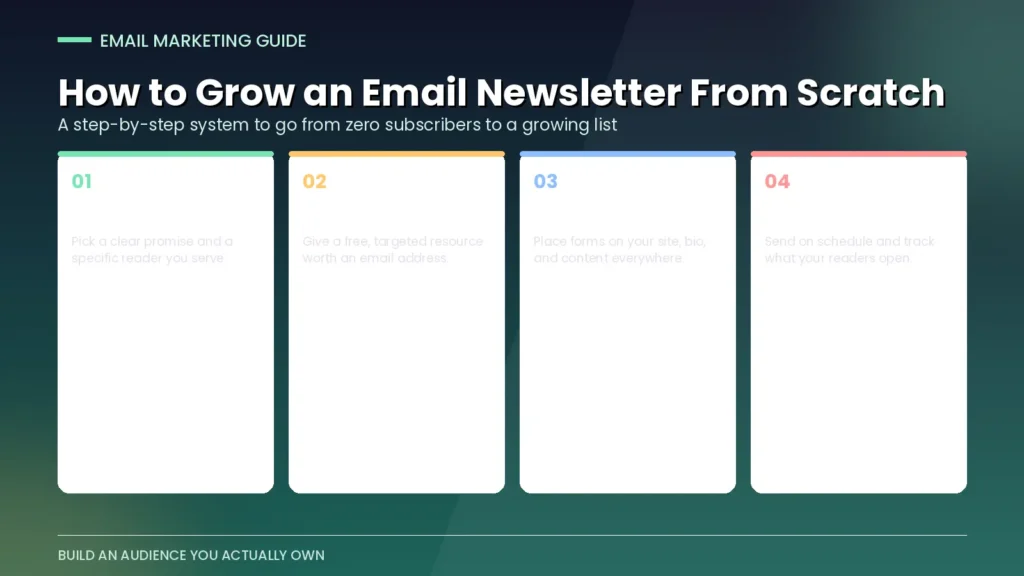
Before asking anyone to subscribe, get specific about what your newsletter is actually about and who it serves. A newsletter that promises “marketing tips” is far less compelling than one that promises “one actionable email marketing tactic every Tuesday for small business owners.” The clearer your promise, the easier it becomes to attract the right subscribers.
Ask yourself:
- Who exactly is this newsletter for?
- What specific problem does it help solve?
- What will readers get that they can’t get anywhere else?
A sharp, well-defined niche makes every future growth tactic more effective, because your messaging becomes instantly relevant to the right audience.
Step 2: Choose the Right Email Platform
Your platform choice affects how easily you can grow later, so pick a tool that supports simple sign-up forms, automation, and basic analytics. Popular options include:
- Beehiiv — strong for newsletter-first creators with built-in growth tools
- ConvertKit — great for creators who want tagging and automation
- Mailchimp — beginner-friendly with a generous free tier
- Substack — simple setup with built-in discovery features
Whichever platform you choose, make sure your sign-up form is fast to load, mobile-friendly, and asks for the bare minimum — usually just an email address.
Step 3: Create a Lead Magnet Worth Subscribing For
People rarely subscribe to a brand-new newsletter out of pure curiosity. Give them a reason with a lead magnet — a free resource offered in exchange for an email address. Effective lead magnets include:
- A downloadable checklist or template
- A short email mini-course
- A resource guide or swipe file
- Early access to future content or discounts
The lead magnet should solve one specific, immediate problem related to your newsletter’s core promise. The more targeted it is, the higher your conversion rate will be.
Step 4: Add Sign-Up Opportunities Everywhere
Once your lead magnet is ready, make it easy for people to find and subscribe. Growing an email newsletter from scratch depends heavily on visibility, so place sign-up prompts in multiple places:
- Website homepage and blog post footers
- Social media bios and pinned posts
- Guest posts or podcast appearances
- Email signatures
- Exit-intent pop-ups on your website
Every additional touchpoint slightly increases your conversion rate, so don’t rely on a single sign-up form buried on one page.
Step 5: Repurpose Existing Content to Drive Sign-Ups
If you already publish blog posts, videos, or social content, you have an easy growth channel sitting right in front of you. Turn your best-performing content into promotional touchpoints for your newsletter by adding a clear call-to-action at the end of each piece. You can also break down popular posts into email-friendly summaries to demonstrate the value new subscribers can expect.
This approach saves time because you’re not creating brand-new promotional material — you’re simply redirecting existing traffic toward your list.
Step 6: Nail Your Welcome Sequence
The first few emails a new subscriber receives set the tone for your entire relationship with them. A strong welcome sequence should:
- Deliver the promised lead magnet immediately
- Introduce who you are and what readers can expect
- Share your best or most popular content
- Set expectations for sending frequency
- Invite a simple reply to boost engagement signals
A thoughtful welcome sequence dramatically increases the odds that new subscribers stay engaged instead of unsubscribing after the first email.
Step 7: Stay Consistent and Track What Works
Consistency is often the real differentiator between newsletters that grow and ones that stall. Pick a sending schedule you can realistically maintain — weekly or biweekly is common for beginners — and stick to it. Over time, review your open rates, click-through rates, and subscriber growth to see which subject lines, topics, and formats resonate most.
Small, consistent improvements compound significantly faster than sporadic bursts of effort.
Common Mistakes to Avoid
- Launching without a clear niche or target reader
- Making the sign-up form too complicated or hard to find
- Sending inconsistently, then disappearing for weeks
- Ignoring subscriber engagement data
- Focusing only on growth while neglecting the actual quality of each email
Avoiding these pitfalls keeps your list healthy and engaged rather than large but unresponsive.
Also Read
Blogging vs YouTube vs Newsletter: Which Platform Should You Start With?
Final Thoughts
Learning how to grow an email newsletter from scratch comes down to a simple loop: define your niche, give people a reason to subscribe, make sign-up effortless, and consistently deliver value once they’re on your list. There’s no shortcut that replaces consistency, but with a clear system in place, even a newsletter that starts at zero subscribers can grow into a channel you fully own and depend on for years to come.