Getting your website to rank on Google page 1 is one of the most valuable skills any business owner, blogger, or marketer can develop. How to Rank on Google Page 1 With over 90% of online experiences starting with a search engine, and the vast majority of clicks going to results on the first page, learning how to rank on Google page 1 isn’t optional anymore—it’s essential for survival in a competitive digital landscape.
If you’ve ever wondered why some websites consistently dominate search results while others remain buried on page 5 or beyond, the answer lies in a combination of strategy, consistency, and technical know-how. This guide breaks down exactly what it takes to rank on Google page 1, step by step.
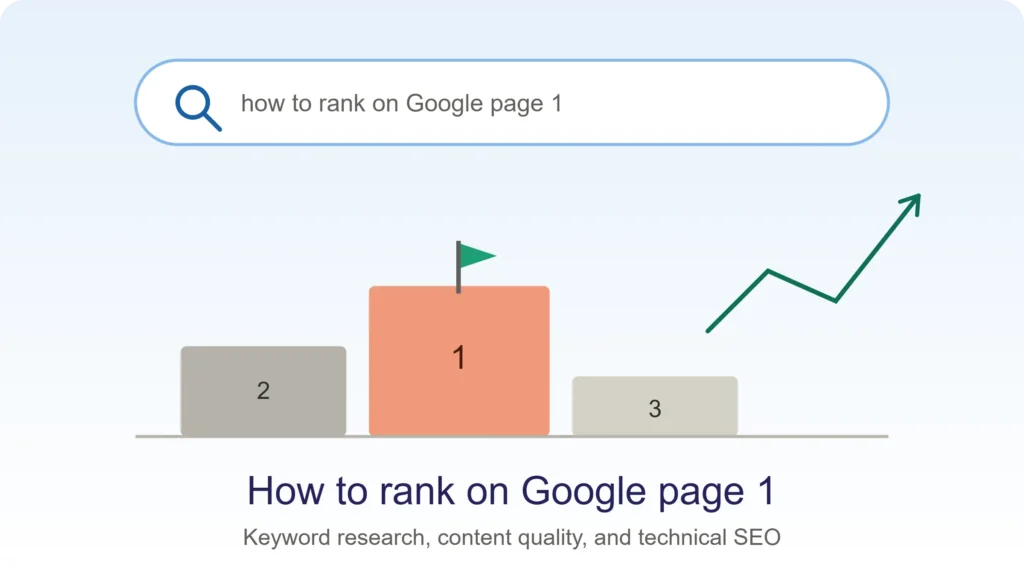
Why Ranking on Google Page 1 Matters
Studies consistently show that the first page of Google captures nearly all meaningful organic traffic. Very few users bother clicking to page 2. This means that if your content, product, or service lives anywhere beyond page 1, you’re essentially invisible to most searchers.
Ranking on Google page 1 brings:
- Increased organic traffic without paying for ads
- Higher brand credibility and trust
- Better lead generation and conversion rates
- Long-term, sustainable visibility compared to paid campaigns
Simply put, mastering how to rank on Google page 1 is one of the highest-leverage investments you can make in your online presence.
Understanding How Google Ranks Websites
Before you can rank on Google page 1, it’s important to understand what Google is actually looking for. Google’s algorithm evaluates hundreds of ranking factors, but they generally fall into a few core categories:
- Relevance – Does your content match search intent?
- Authority – Do other reputable sites link to or reference you?
- User Experience – Is your site fast, mobile-friendly, and easy to navigate?
- Content Quality – Is your content original, in-depth, and genuinely useful?
Google’s mission is to serve the best possible answer to a searcher’s query. If you align your content strategy with that mission, ranking on Google page 1 becomes far more achievable.
Keyword Research: The Foundation of Ranking
You cannot rank on Google page 1 without targeting the right keywords. Effective keyword research involves identifying terms your audience is actually searching for, along with understanding their intent behind those searches.
Start by using tools like Google Keyword Planner, Ahrefs, SEMrush, or even Google’s own autocomplete and “People Also Ask” sections. Look for keywords with:
- Reasonable search volume
- Manageable competition
- Clear commercial or informational intent
Once you’ve identified your primary keyword—such as “how to rank on Google page 1″—naturally weave it into your title, introduction, headings, and throughout the body content without overstuffing it. Google’s algorithm rewards natural, contextual keyword usage far more than robotic repetition.
On-Page SEO Best Practices
On-page optimization is where most of your ranking power comes from. To rank on Google page 1, make sure you’re optimizing these key elements:
- Title tags – Include your target keyword near the beginning
- Meta descriptions – Write compelling summaries that encourage clicks
- Header tags (H1, H2, H3) – Structure content logically for readers and search engines
- URL structure – Keep URLs short, descriptive, and keyword-rich
- Internal linking – Connect related pages to boost site architecture and authority
- Image alt text – Describe images while incorporating relevant keywords
Each of these elements sends signals to Google about what your page is about and how well it serves user intent.
Content Quality: The Real Ranking Driver
Google has repeatedly emphasized that content quality is the single biggest factor in long-term rankings. To truly rank on Google page 1, your content must be comprehensive, well-researched, and genuinely more valuable than competing pages.
This means going beyond surface-level information. Answer follow-up questions readers might have, include actionable examples, and format your content for easy scanning with bullet points, short paragraphs, and clear subheadings. Content that keeps readers engaged and reduces bounce rate signals to Google that your page deserves a higher position.
Building Backlinks and Authority
Backlinks remain one of Google’s strongest ranking signals. Websites that earn links from reputable, relevant sources are far more likely to rank on Google page 1 than those without any external validation.
Focus on ethical link-building strategies such as:
- Guest posting on industry-relevant blogs
- Creating shareable, data-driven content
- Building relationships with journalists and influencers
- Getting listed in relevant business directories
Avoid shortcuts like buying links or participating in link farms, as these tactics can trigger penalties that severely damage your ability to rank on Google page 1.
Technical SEO and Site Performance
Even the best content won’t rank on Google page 1 if your website is slow, insecure, or difficult to navigate. Technical SEO ensures Google can crawl, index, and understand your site properly.
Key technical factors include page speed, mobile responsiveness, HTTPS security, clean site architecture, and an updated XML sitemap. Regularly auditing your site with tools like Google Search Console helps you catch and fix issues before they hurt your rankings.
Also Read
How to Do Keyword Research for Beginners: A Step-by-Step Guide
Final Thoughts
Learning how to rank on Google page 1 isn’t about finding a single magic trick—it’s about combining solid keyword research, quality content, strong technical foundations, and genuine authority-building over time. Search engine optimization is a marathon, not a sprint, but the businesses and creators who commit to these fundamentals consistently earn the visibility, traffic, and trust that come with a page 1 ranking.
Start applying these strategies today, stay patient, and track your progress. With consistency and the right approach, climbing to Google page 1 is well within your reach.